ESSAY · 13 June 2026 · 7 min read
One-on-One, at Scale: what building far from medicine taught me about carrying a master's judgment
I build instruments for clinicians. CineCoach took me to the opposite end of the spectrum (a Paris cinematographer's craft), and the hardest part of the build was teaching an eager AI to withhold, the way a real teacher does.
Building AI · Learning · Culture
Most of what I build sits close to medicine. So when I tell people I spent the better part of this year on an AI product for filmmakers (built around a Paris cinematographer, shipped from Paris), the reasonable question is why. The honest answer is that I went looking for the furthest domain from the operating theatre I could find, partly to test a suspicion: that the instinct underneath my healthcare work was not really about healthcare at all. CineCoach is where I tested it. The suspicion held, and what it taught me is worth writing down.
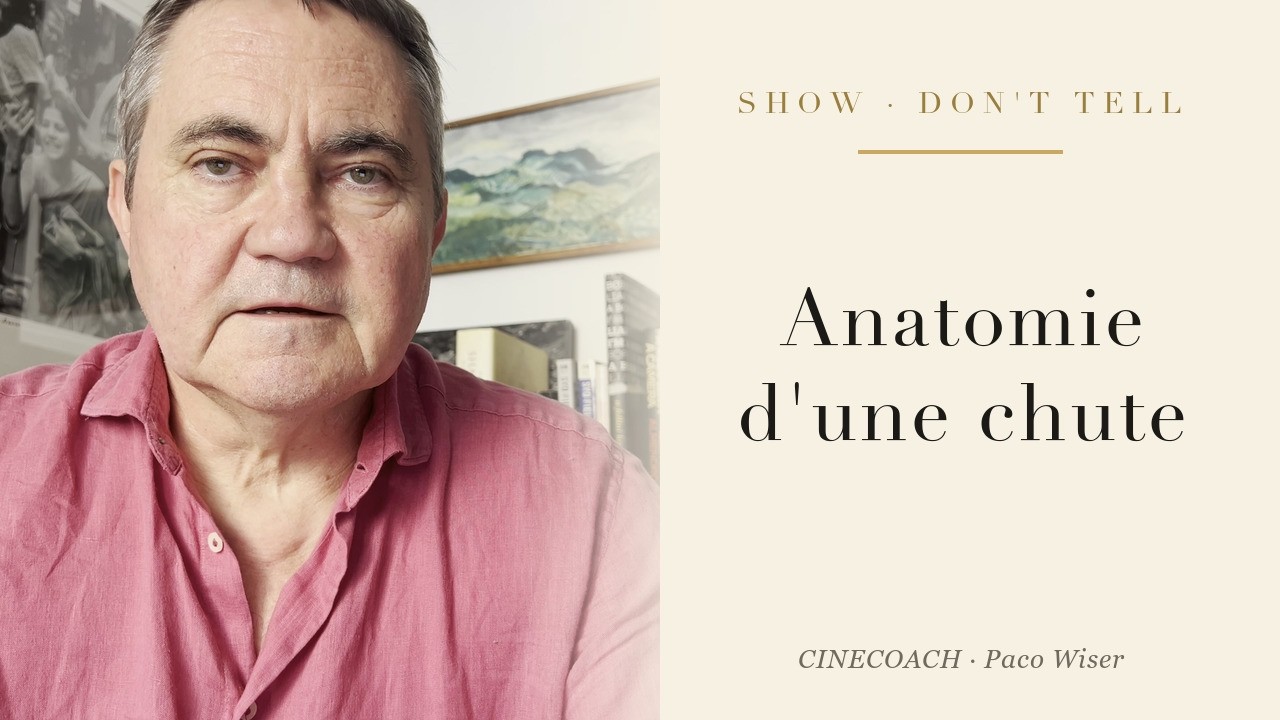
First, the thing I did not do. I am not the cinema expert in this venture, and it would be absurd to pretend otherwise. That is Paco Wiser – a Franco-American cinematographer, screenwriter, and teacher with forty-five years behind the camera, trained in Brussels at seventeen, and for years on the faculty of EICAR in Paris. He is still on set most weeks, directing and shooting, and still in the classroom. CineCoach is his method, his voice, his judgement. My job was the builder's job: to figure out whether all of that could be carried, faithfully, to people who will never get into his classroom.
The problem a great teacher cannot solve
Paco can teach a couple of hundred students a year. That is roughly the ceiling for any teacher who actually teaches – who reads your scene, tells you where it goes slack, and pushes you to do it again. Meanwhile there is a twenty-year-old in Buenos Aires, and one in Lagos, and one in Seoul, who would give a great deal for one honest hour of that attention and will never have it. The demand is effectively unbounded and the supply is one human being with a finite week.
This is an old problem wearing new clothes. It is the same constraint that broke the Indian guru-shishya tradition I have written about elsewhere: the most effective form of teaching we know (one master, one student, sustained personal attention) is also the least scalable, and so for most of history it has been rationed to the few who could reach the teacher. The framing I kept coming back to in our early conversations was this: AI cannot replace Paco, but it might be able to deliver his expertise to thousands of people at once. Not a course about him. A personalised school – one-on-one, at scale.
Why the obvious version is worthless
The trap is that this looks easy, and the easy version is actively bad. There are already plenty of AI tools that will give feedback on a screenplay. Paste your scene, get notes. They are useless, and useless in a specific and instructive way: they optimise.
A large language model, left to its defaults, is a pleaser. It wants to be helpful, balanced, and encouraging. Ask it about your scene and it will find something nice to say, soften the criticism, and (this is the fatal part) nudge you toward the smoother, more competent, more conflict-free version of what you wrote. In almost any other context that instinct is a feature. In cinema it is poison, because the smooth, competent, conflict-free version of a scene is precisely the version that is not cinema. The flaw you were about to sand off was the only interesting thing in it.
So the real work of CineCoach was not teaching the software what Paco knows. It was teaching it what Paco refuses to do.
Capturing the refusals
Paco will not sand down a character's flaws, because the flaws are what make a character human. He will not reward technical polish that serves the filmmaker's ego over the story – "there are people who make films," he says, "and people who make cinema." He will not let you write camera directions into a screenplay, because that is the director's imagination and the cinematographer's canvas, and putting "ZOOM IN on her face" on the page is stealing from both. He does not punish naivety; he punishes arrogance.
Every one of those is a refusal – a place where the eager, agreeable default of the model has to be overridden and held. Getting software to withhold praise, to push instead of please, to leave deliberate room for the artist rather than fill every gap with competent suggestion, turned out to be most of the engineering. Not capability. Restraint.
Underneath it is his actual method, made legible. He reads a scene in passes – first as a spectator (was I surprised, did I care, where did my attention drift?), then as a diagnostician (what is this even about; is there a theme; does the drama serve it?), then as a cinematographer (can I see the film on the page, or only stage directions?), and only then as a teacher, leading with what works before naming the gap between what you intended and what landed. He teaches the way he learned ("to become a great filmmaker, you have to become a great spectator"): visceral before analytical, through films and through his own metaphors. The scene with no engine is a Ferrari with no motor. Theme is the iceberg: felt in every choice, never spoken. We did not build an AI that knows about cinema. We built one that evaluates the way this one particular master evaluates, in his voice, with his references and his hard limits intact.
The same thing, three times
Standing back, I realised I had built the same thing three times, in domains that could not look more different.
Pupilux takes a signal a clinician reads by eye and guesses at, and turns it into a measurement anyone can take. MyGurukul takes a tradition a guru once carried by voice and makes its texts reachable without distortion. CineCoach takes a craft a master can only teach one room at a time and lets a stranger half a world away sit, in effect, in that room. The domains share nothing – a brainstem reflex, the Upanishads, a screenplay. The shape is identical. In each case the valuable, scarce thing was locked inside a person or a moment, and AI had quietly become good enough to carry it faithfully outward – if, and only if, you build it to carry that specific thing rather than to be impressively, generically smart. The discipline is the product. The generic version is the failure.
What it is not
The limits deserve the same honesty here that Pupilux gets. CineCoach is Paco's reach, not Paco. It will give you his judgement on your pages, in his voice, at any hour, for the price of a couple of cinema tickets a month – and that is genuinely worth having. It will not put you on a set beside him, and it does not pretend to. The subscription is not the master; it is the door to the master's method.
And taste, in the end, remains the scarce thing. What CineCoach scales is Paco's taste – formed over forty-five years and encoded, refusals and all, as faithfully as we could manage. It does not manufacture taste out of nothing, for him or for you. It can show you, relentlessly and honestly, the distance between what you meant and what you put on the page. Closing that distance is still, as it has always been, your work.
I went to the far side of the world from medicine expecting a different kind of problem. I found the same one, and I am fairly sure now it is the problem I am going to keep working on, wherever the domain happens to be.
Explore CineCoach at cinecoach.paris.